Owning the World…
This is the one thing that countless people have attempted time and time again to accomplish but have failed. It is not necessarily because they were incompetent. It is because they simply did not possess everything required.
I believe that owning the world or at least controlling a substantial portion of it is not impossible. The formula is deceptively simple. One needs religious power. One needs political power. One needs money. One needs time. And one needs social influence. These are not merely instruments of authority. They are the forces through which societies are constructed, institutions are maintained and individuals are persuaded to act according to a particular vision of the world.
History has produced people who came remarkably close to assembling these pieces. Hitler is perhaps one of the clearest examples. By 1945 the Nazi Party had approximately 8 million paying members. Germany itself had been transformed into a totalitarian state in which political opposition had been dismantled and virtually every major institution had been subjected to Nazi influence. Hitler possessed extraordinary political authority and an immense capacity to mobilise society. Yet he never possessed religious authority in the same manner. In 1933 Germany had approximately 60 million inhabitants and almost all were Christian. Around 40 million belonged to Protestant churches while approximately 20 million were Catholic. Hitler could attempt to subordinate these institutions but he could not simply manufacture their centuries of accumulated religious legitimacy. His power therefore remained incomplete. He possessed the state but he did not possess Christianity itself. (Holocaust Encyclopedia)
Mussolini encountered a similar boundary. Fascism gave him an extraordinary degree of political authority and mass mobilisation, yet Italy remained profoundly Catholic. The Lateran Accords of 1929 were significant precisely because Mussolini still had to negotiate with an institution whose authority extended beyond the Fascist state. The Vatican was not merely another political organisation that could be absorbed into the machinery of government. It possessed an independent religious legitimacy that Fascism could not simply manufacture. Mussolini could dominate the Italian state but he could not simply become the Pope.
Putin presents a more contemporary variation of the same phenomenon. His political power has endured for decades and the Russian state has cultivated a close relationship with the Russian Orthodox Church. Yet even here the distinction between political authority and religious authority remains important. Political power can regulate institutions. It can influence them. It can even attempt to absorb them. But religious legitimacy has its own historical foundations. It is precisely this distinction that makes religion such an extraordinary component of power.
The scale of religion itself is almost difficult to comprehend. According to Pew Research Center’s most recent comprehensive global estimates the world contained approximately 2.3 billion Christians in 2020. Muslims numbered approximately 2.0 billion while Hindus numbered approximately 1.2 billion. Christians alone constituted 28.8 percent of humanity. Muslims constituted 25.6 percent and Hindus constituted 14.9 percent. Altogether 75.8 percent of the world’s population identified with some religion in 2020. (Pew Research Center)
Those figures are not simply demographic curiosities. They represent an extraordinary concentration of human identity. Christianity alone spans approximately 120 countries in which Christians constitute a majority. Sub-Saharan Africa now contains more Christians than Europe with approximately 30.7 percent of the world’s Christians living there compared with 22.3 percent in Europe. The centre of gravity of Christianity has therefore moved dramatically across the course of modern history. (Pew Research Center)
Islam demonstrates another dimension of religious power. Between 2010 and 2020 the global Muslim population increased from approximately 1.7 billion to 2.0 billion. That represented growth of 21 percent compared with approximately 10 percent growth in the world’s total population. Hinduism meanwhile encompassed approximately 1.2 billion people in 2020 and approximately 99 percent of the world’s Hindus lived within the Asia-Pacific region. India alone was home to approximately 95 percent of the world’s Hindu population. (Pew Research Center)
And then there is the Quran, the Bible and the vast corpus of Hindu sacred traditions. Their significance does not arise merely from the number of people who read them. Their significance lies in their capacity to establish frameworks through which people interpret morality, existence, duty, suffering, family and the purpose of life. A political constitution can determine what a state permits. A religious text can influence what a person believes they ought to do even when nobody is watching.
That is an entirely different category of power.
The Pope demonstrates this on an institutional level. The papacy does not derive its influence from military supremacy or economic dominance. Its authority is fundamentally religious. Yet the Catholic Church encompasses more than a billion people across the world. That makes the papacy an extraordinary example of a form of influence that survives independently of conventional political power. The individual sitting in the Vatican does not need to command a superpower in order to possess global significance.
This is why I consider religious power to be one of the five fundamental components of what I call “owning the world.”
Political power determines what people can be compelled to do. Money determines what resources can be acquired. Social power determines what societies accept as legitimate. Time determines whether that influence can survive beyond a single moment. Religious power reaches somewhere different. It can influence what people consider morally correct in the first place.
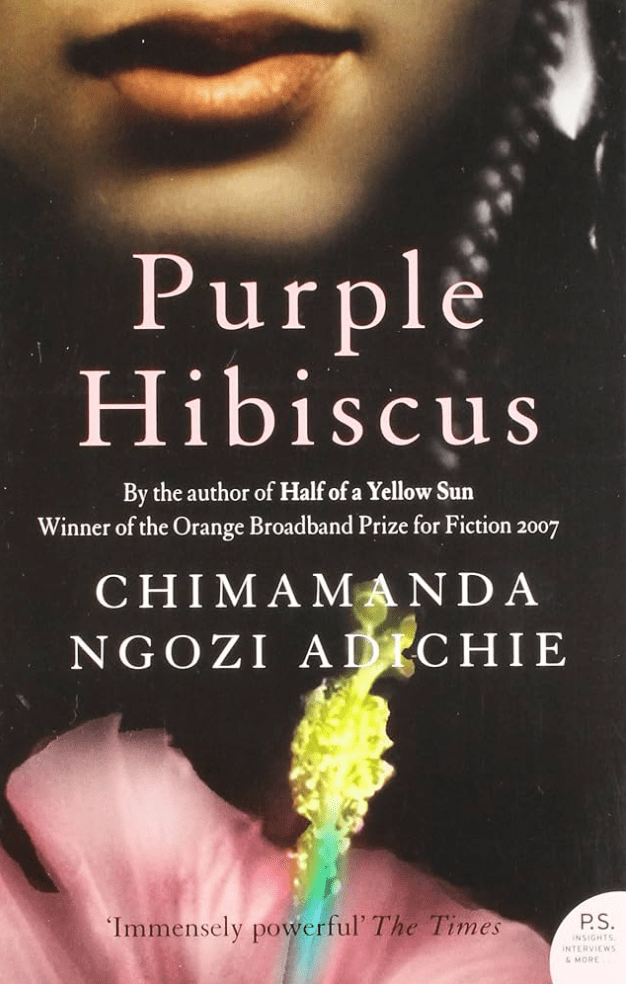
And this is where Purple Hibiscus becomes considerably more fascinating than a conventional story about religion.
Chimamanda Ngozi Adichie does not place religion in the background of Eugene Achike’s life. She places it at its centre. His Christianity provides the architecture through which he understands morality, discipline, family and responsibility. His religious convictions are not simply beliefs that he privately possesses. They become principles through which his household is organised.
Eugene therefore possesses a form of power that is remarkably different from that of Hitler, Mussolini or Putin. He does not possess a state. He does not command an army. He does not possess billions of dollars. His world is considerably smaller.
But within that world he possesses religious authority.
His interpretation of Christianity becomes the standard by which his family is expected to live. It establishes what is permissible and what is forbidden. It determines what is considered virtuous and what is considered sinful. His beliefs therefore transcend personal conviction and become a system of authority.
And that is what makes Purple Hibiscus so intellectually compelling.
Adichie does not need to construct a dictator ruling over millions of people. She takes the same fundamental question of power and compresses it into a household. Instead of asking what happens when a government controls its population she asks what happens when one person possesses enough authority to define another person’s reality.
The distinction is subtle but enormous.
Religion can provide certainty. It can provide belonging. It can provide morality. It can provide a vocabulary through which people understand suffering and hope. The fact that approximately three quarters of humanity identified with a religion in 2020 demonstrates that its influence has hardly disappeared in the modern world. (Pew Research Center)
But precisely because religion can possess such profound authority it becomes extraordinarily significant when that authority is concentrated within an individual.
This is what Eugene represents.
He does not demonstrate that religion is inherently oppressive. Quite the opposite. The reason his religious authority has such extraordinary force is because religion itself has the capacity to provide meaning and structure. The fascinating question is therefore not whether religion is good or bad. The question is what happens when one person’s interpretation of something believed to possess transcendent authority becomes indistinguishable from the rules governing everyone around them.
That is where Purple Hibiscus intersects with my theory of power.
Hitler possessed political authority and immense social influence but could not completely absorb religious authority. Mussolini possessed the machinery of the Fascist state but still had to negotiate with the Catholic Church. Putin possesses immense political power and maintains a significant relationship with Russian Orthodoxy but does not thereby acquire control over every dimension of religious life.
Each possessed pieces of the puzzle.
None possessed the entire puzzle.
Perhaps that is why “owning the world” has always remained so elusive.
Maybe it was never really about possessing everything.
Maybe it was about possessing the right things.
Because political power can dictate behaviour. Money can purchase resources. Social influence can manufacture acceptance. Time can transform temporary authority into something enduring. Religious power can influence the very standards by which people decide what is right.
Purple Hibiscus takes that final idea and places it inside a family.
And suddenly the question becomes much smaller.
It is no longer about controlling a country.
It is no longer about controlling a continent.
It is simply about controlling the world of another person.
And perhaps that is the most unsettling revelation in Purple Hibiscus: that the smallest version of owning the world may not be owning land, governments or wealth at all.
It may simply be possessing enough influence to convince someone else that your version of the world is the only version that exists.


Leave a comment